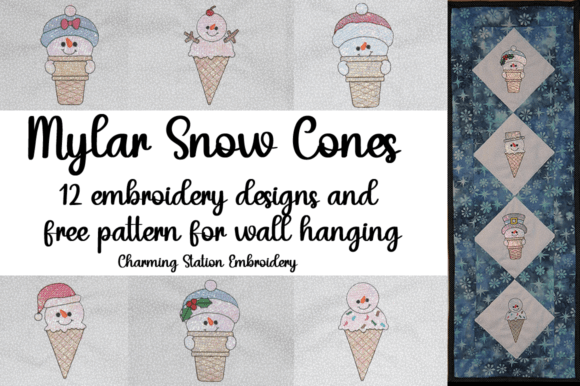
Mylar Snow Cones: A Designer's Real-World Review
When I first opened the folder for Mylar Snow Cones, I didn't just see a collection of graphics; I saw potential. As someone who spends countless hours evaluating digital assets for both personal studio work and client commissions, my first impression is usually about the "vibe." This set immediately evokes a crisp, wintry atmosphere that feels fresh yet nostalgic. The concept of snow cones rendered in Mylar suggests a unique texture—shiny, reflective, and cool to the touch—which translates surprisingly well into thread when executed correctly.
The description mentions twelve delightful designs optimized specifically for Mylar application. That specificity is crucial. In the world of machine embroidery, generic winter themes often feel flat or cliché. However, these designs promise a distinct visual personality that stands out from standard frost patterns. Whether you are a hobbyist looking to create a cozy holiday gift or an Etsy seller building a boutique line, the mood here is inviting and playful without being overly childish. It strikes a balance that works beautifully for nursery decor, adult apparel, or even high-end home goods.
From Digital File to Finished Product: A Real Scenario
To understand how Mylar Snow Cones truly performs, let's look at a practical scenario. Imagine you are preparing inventory for a local craft fair or launching a new collection on your online shop. You have decided to create a series of custom embroidered tote bags featuring winter treats. Most designers would grab a simple snowflake or a mug of cocoa. But with this set, you decide to stitch the snow cone designs onto sturdy canvas totes using metallic threads to mimic the reflective quality of Mylar.
The result? A finished product that catches the light and draws immediate attention. Customers walking by the booth stop because the embroidery has depth and a shimmering effect that standard satin stitches lack. The design works exceptionally well as a tote bag design because the central motif is bold enough to be seen from a distance but detailed enough to hold interest up close. If you were to adapt this for a sweatshirt embroidery project, the contrast between the shiny Mylar-style stitching and the soft fleece creates a premium feel that justifies a higher price point. It transforms a simple garment into a statement piece.
I also envision this set being used for baby items. Since the text notes that the twelve designs could make a lovely baby, lap, or bed quilt, the scale is clearly versatile. For a personalized gift, stitching a single snow cone onto a onesie or a burp cloth adds a whimsical touch that parents love. The design isn't just a decoration; it tells a story of cold weather fun, making it perfect for holiday gifts or winter-themed nursery accents.
Where the Design Shines
In terms of visual appeal and product value, Mylar Snow Cones elevates the perceived quality of any item it adorns. When a customer sees a well-executed design that mimics a specific material like foil or Mylar, they associate that effort with craftsmanship. This builds trust and encourages repeat business for small shop owners. The design assets are ideal for creating printable mockups for your listings, allowing you to showcase how the embroidery will look on different backgrounds before you even cut the fabric.
The versatility extends to various products beyond clothing. Think about aprons for a kitchen towel line or pillow covers for seasonal home decor. The theme fits seamlessly into winter embroidery collections. Because there are twelve variations, you can mix and match them to create a cohesive wall hanging or a larger quilt project, offering customers customization options that increase engagement. Whether you are selling finished goods or providing digital embroidery files to other makers, the clarity and charm of these designs make them a valuable addition to your catalog.
Navigating Challenges: Where to Be Careful
However, every experienced designer knows that a beautiful file does not guarantee a flawless execution. There are specific situations where Mylar Snow Cones requires careful consideration. First, consider the hoop size. While the set includes multiple designs, some of the smaller details might get lost if you attempt to stitch them in a very small hoop. Always check the recommended dimensions against your machine's capabilities.
Fabric choice is another critical factor. The design relies on contrast to sell the "Mylar" effect. On dark fabrics, you will need to select thread colors that pop, perhaps using a lighter underlay or a contrasting fill stitch to ensure the shape doesn't disappear into the background. Conversely, on light fabrics, the shine needs to be bright enough to stand out. Thin or stretchy fabrics, such as lightweight t-shirts or jersey knits, can be problematic. Without proper stabilizer support, the tension required for the dense areas of the design could cause puckering, ruining the clean lines of the snow cone.
Curved surfaces, like caps or hats, present their own set of challenges. Embroidering a complex shape like a snow cone on a curved brim requires precise digitizing adjustments to account for the distortion of the fabric. If the design was not originally optimized for curved surfaces, you may need to resize or reposition elements to avoid stretching the thread too thin at the edges. Additionally, products that require frequent washing, such as everyday tote bags or children's clothing, should be tested for durability. While the design looks great initially, the density of the stitches must be balanced so that the fabric remains flexible and the threads do not snag easily during laundering.
Practical Notes for the Professional Maker
Before committing to a full production run or a large commercial order, I strongly advise testing the design on scrap fabric first. This step is non-negotiable. Run the embroidery file through your machine and inspect the stitch density closely. Look for any areas where the thread might be pulling the fabric or where the satin stitch edges might look jagged. Check the thread color contrast by holding the sample up to the light; sometimes a color that looks good on screen appears dull once stitched.
Review the layout to ensure that small details remain legible. If the design includes tiny lettering or intricate corners, verify that they will hold up on your intended medium. Testing in black and white mockups can help you visualize the value of the design without the distraction of color. Compare how it looks on both light and dark fabric backgrounds to determine which combinations yield the best results. Using the proper stabilizer is essential to maintain the integrity of the design, especially for heavier applications like patches or aprons.
Finally, confirm whether the licensing allows for both personal and commercial use. If you plan to sell finished items or include these designs in your own digital product previews, understanding the terms is vital to protect your business. Ensure you have the correct stitch density settings for your specific machine model, as different brands handle thread flow differently.
Mylar Snow Cones offers a refreshing take on winter themes, blending modern aesthetics with traditional embroidery techniques. By approaching the project with a critical eye and following these practical steps, you can turn this digital asset into a stunning finished product that delights customers and enhances your brand identity. Whether you are crafting a single personalized gift or scaling up for a boutique line, the attention to detail in this set provides a solid foundation for success.